
The current definition of "rape" would <include> a lack of, or complete absence of, consent. The current definition of "consent" would involve permission for something to happen or agreement to do something.
Alternatively, where women are concerned (in the Bible), I do not recall a woman's consent to be deemed necessary or required? Biblical Hebrew did not have a single legal or technical term that exactly corresponds to the current understanding for the term "rape", which nowadays focuses more-so on a lack of consent in various forms. Such forms involving lack of consent would include: fear - (as a lack of a verbal "no" is not necessarily consent, especially if the person is afraid to resist verbally or physically due to a specific set of circumstances), age - (as it relates to an age of true accountability), slumber - (as it relates to advancement while their partner is asleep), unconsciousness, intoxication, etc... You get the gist... The Hebrew Bible uses several different verbs and descriptive phrases to refer to "forced sexual assault", but not the modern definition of "rape". The Biblical concept of sexual violation was viewed primarily through the lens of family honor, economic consequences, and/or social disgrace, but not the woman's violation of autonomy?
Today, it is mere common knowledge that if a woman does not grant consent to sex, (as explained above), it most certainly can be considered "rape".
I trust we can all reference the Biblical verse(s) which would be deemed (condoned 'rape') in the modern world? Such situational 'rape' would include 1) the spoils of war and/or 2) the bonds of "marriage" as it directly relates to the spoils of war and/or even maybe without. In essence, as stated above, commanded Biblical circumstances existed where a lack of a verbal 'no' does not necessarily grant consent.
For debate:
1. Why would an all-knowing god omit clear and specific instruction regarding a woman's consent? Meaning, did God purposefully omit this criterion because it is not necessary/required? If consent is necessary/required, why omit this instruction, as these commands instead suggest that the woman's consent is instead not required?
2. Does the Bible's lack of the modern term for 'rape' further demonstrate that a claimed all-knowing god had no part in this ancient collection of writings?
3. How do Christians today appeal to the statement, "rape is wrong", when the Bible itself does not directly express its direct abolition, but instead looks to (condone/permit) 'rape'?
"Rape" in the Bible
Moderator: Moderators
-
POI

- Savant
- Posts: 6125
- Joined: Fri Jul 30, 2021 5:22 pm
- Has thanked: 2189 times
- Been thanked: 1649 times
"Rape" in the Bible
Post #1In case anyone is wondering... The avatar quote states the following:
"I asked God for a bike, but I know God doesn't work that way. So I stole a bike and asked for forgiveness."
"I asked God for a bike, but I know God doesn't work that way. So I stole a bike and asked for forgiveness."
Re: "Rape" in the Bible
Post #51Good review. And don't forget those rapist Benjamites were also Sodomites that first wanted to rape the Levite male. They had to settle for a woman.Face to face wrote: ↑Tue Feb 03, 2026 9:24 pm .
i have seen comments around the internet regarding rape in dealing with - Jdg 20
such as ........ . . "" Go to a party and hide. When the women comes out to dance, grab one and carry her off to be your wife, ""
but lets read the facts
WHY MAKE THIS CLAIM REGARDING - Jdg 20:47
the passage is dealing with a MASSIVE war that broke out between Benjamin and the rest of Israel because of a woman of Israel was raped and murdered
all of the other tribes of Israel made war against the tribe of Benjamin to punish the rapist
AFTER THE TRIBE OF BENJAMIN WAS COMPLETELY DEFEATED BY THE REST OF ISRAEL
:12 And they found among the inhabitants of Jabeshgilead four hundred young virgins, that had known no man by lying with any male: and they brought them unto the camp to Shiloh, which is in the land of Canaan.
The truth is that this is not a " party :
this was an event where a religious feast ceremony was taking place and the four hundred young virgins were prisoners of war who lived a city that was completely destroyed by Israel because the city was protecting men who had raped a woman
:47 Also says - That six hundred men of Benjamin had survived the war . So Israel wanted to continue the inheritance and future generations of the tribe of Benjamin.
And they are now prisoners of war - captives of war.
And the city of Jabesh Gilead located just a few miles south of Gibeah -
So now - the city of Jabesh Gilead is also taken as captives and prisoners and they remove the 400 virgins out of the city that is filled with the protectors of criminals and rapists
And Israel takes the female prisoners that they believe that can salvage into a clean environment Godly family atmosphere and they place these women prisoners together with other prisoner males
\
\ and the female virgins are out of all of the captive war prisoners.
– meaning - from the two cities where they believe the savage rapist’s and murderers were hiding in and being protected
So there 200 prisoner of war, captive men surviving - who did not have a wife - they take the female prisoners and provide them with a family and husband from the men of Benjamin.
basically in Jdg 20
the entire Tribe of Benjamin is protecting a group of men in a gentile city who had raped and killed a Jewish woman
all of the other tribes make war against the tribe of Benjamin and completely destroy the entire city in order to bring the rapists to justice.
there are a number of female prisoners of war both men and women who are left alive in the city -
the men and women prisoners of war are first separated
but then Israel decides a plan to wait till the women are gathered out away from the evil rapist city and then take the innocent virgin women out and give them a marriage plan
i understand that many people may not believe this story to be real but i ask that we at least look at the context of the story that is presented in the passage and how Israel dealt with the rape of a women - in order to bring the group of men to justice all of Israel completely destroyed an entire city killing hundreds of men who were protecting the rapists
- there were prisoners of war who were innocent virgin women, Israel waits till these women are gathered outside of the destroyed city and takes them into their nation.
this is how God sees justice and honor - the alternative would be to leave the young virgin women to live in a city that condones and promotes and protects rape and murder of innocent women
the God of the Bible leads the reader to believe that it was best to remove the virgin women out of the city that protects and promotes rape of women - and bring them into Israel ..
IF WE READ THE CONTEXT FROM THE MANUSCRIPTS WE FIND THAT THERE SIMPLY ARE NO MANUSCRIPS THAT PROMOTE RAPE AND ABUSE OF WOMEN.
-
JehovahsWitness

- Savant
- Posts: 23438
- Joined: Wed Sep 29, 2010 6:03 am
- Has thanked: 930 times
- Been thanked: 1349 times
- Contact:
Re: "Rape" in the Bible
Post #52I think its also worth highlighting that the nation went to war over the rape and murder of one woman. Granted it seemed the Benjamines had become morally degenerate, but still a civil war was launched over this case. I doubt any nation today would go to such lengths to ensure such horrific actions are not repeated.
Indeed few if any countries today have the death penalty for rape; and although raping a virgin did not incur the death penalty, I think an automatic financial settlement acknowledged a wrong had been committed against her person (not just her "husband" or even her father, but against her ) which is a relatively modern legal concept. We like to think that rape laws have been on the statues for millenia but sadly that is not the case.
Given the historical context and limitations the Mosaic law was ahead of its time and should be lauded rather than criticised.
INDEX: More bible based ANSWERS
http://debatingchristianity.com/forum/v ... 81#p826681
"For if we live, we live to Jehovah, and if we die, we die to Jehovah. So both if we live and if we die, we belong to Jehovah" - Romans 14:8
http://debatingchristianity.com/forum/v ... 81#p826681
"For if we live, we live to Jehovah, and if we die, we die to Jehovah. So both if we live and if we die, we belong to Jehovah" - Romans 14:8
-
Difflugia

- Prodigy
- Posts: 4156
- Joined: Wed Jun 12, 2019 10:25 am
- Location: Michigan
- Has thanked: 4485 times
- Been thanked: 2653 times
Re: "Rape" in the Bible
Post #53I find it out of character, though interesting, that a fundamentalist inerrantist would think that parts of Deuteronomy 22 are the result of "devilish" influence. Even if you somehow think that your faith makes you immune to deception, allowing for Satanic influence in the Bible text itself is a rather atypical way of dealing with theological issues. That's actually a minor plot point of a somewhat famous book.
Clearly. Literary analysis is often a tool of the frivolous and unstable.
My pronouns are he, him, and his.
Re: "Rape" in the Bible
Post #54And so ends the debate. Adios.Difflugia wrote: ↑Mon Feb 16, 2026 9:45 amI find it out of character, though interesting, that a fundamentalist inerrantist would think that parts of Deuteronomy 22 are the result of "devilish" influence. Even if you somehow think that your faith makes you immune to deception, allowing for Satanic influence in the Bible text itself is a rather atypical way of dealing with theological issues. That's actually a minor plot point of a somewhat famous book.
Clearly. Literary analysis is often a tool of the frivolous and unstable.
-
Face to face
- Student
- Posts: 29
- Joined: Wed Apr 23, 2025 11:09 pm
- Been thanked: 5 times
Re: "Rape" in the Bible
Post #55Please pay notice to the Hebrew Manuscript Message
Deu 22: 1 - 26 - THESE PASSAGES CLEARLY EXPLAIN ALL OF THE INSTANCES CONCERNING
A man is put to death for rape - the woman was innocent
A woman is put to death for adultery - if guilty
there was none to save her, she was not guilty – the man is guilty - - - -
ok.. LETS FOCUS ON THE TWO PASSAGES THAT ARE MISTRANSLATED
as these passage go on to explain more
Deu 22:19
וענשׁו AND PUNISH - אתו HIM - מאה ONE HUNDRED - כסף IN SILVER - ונתנו AND GIVE - לאבי TO THE FATHER - הנערה OF THE WOMAN - כי BECAUSE - הוציא HE BROUGHT FORTH - שׁם A NAME - רע OF EVIL - על UPON - בתולת A VIRGIN - ישׂראל OF ISRAEL - ולו תהיה AND IF SHE BECOMES - לאשׁה HIS WIFE - לא NEITHER - יוכל CAN - לשׁלחה HE PUT HER AWAY - כל ALL - ימיו׃ OF HIS DAYS
Meaning =
AND PUNISH HIM ONE HUNDRED IN SILVER AND GIVE TO THE FATHER OF THE WOMAN, BECAUSE HE BROUGHT FORTH A NAME OF EVIL UPON A VIRGIN OF ISRAEL AND IF SHE BECOMES HIS WIFE NEITHER CAN HE PUT HER AWAY ALL OF HIS DAYS
The key word here that the Roman Catholic Translators have left out and excluded from the passage is the Hebrew word “ ולו “ = meaning - lû - loo
- lû - loo meaning = IF; - by implication ( interjectionally as a wish ) IF that!: - “ IF happy with “ (haply), peradventure, I pray thee, though, I IF, IF God (that).
https://biblehub.com/hebrew/3863.htm -
- ולו IF - SHE BECOMES -
this totally changes everything about the situation, - - the passage is simply saying that after all of the false accusations and punishments upon man who had accused the virgin of being unfaithful, the woman still has a choice to stay with the man and “ IF “: perhaps : “ she becomes his wife he cannot put her away all of his days.
ולו תהיה - AND IF SHE BECOMES / PERADVENTURE
- IF / SHE BECOMES HIS WIFE
There really is no severe punishment for any man having casual sex with an unmarried woman in the bible –
either it was rape or not - and “ IF “ not, they both are to be held responsible for being honest and not lying and deceiving the other man - meaning = “””” another man “”” who WOULD later marry the woman –
while, if she lies and claims to be a virgin and is lying about whom she has shared bodily fluids with.
THE SHEET FILLED WITH CONTAMINATION AND NASTY BODILY FLUIDS WOULD SHOW DURING INTERCOURSE - IF THE WOMAN WAS INFECTED WITH A DISEASE, SYMPTOM OR FOUL ODOR
OR LYING ABOUT HER SEXUAL PAST
Blood Crimes Are Real………………………………………………
Another mistranslated passage you mention is found in - - Deu 22:29
Please pay notice to the Hebrew Manuscript Message
:29
:28 that a man lay hold on a woman and lie with her and they be found having sex.
Deu 22:29 ונתן THEN GIVE - האישׁ THE MAN - השׁכב WHO LAY DOWN - עמה WITH HER, - לאבי THE FATHER - הנער OF THE YOUNG WOMAN - חמשׁים FIFTY - כסף SILVER - ולו תהיה IF HE HAD - לאשׁה A WOMAN - תחת UNDER HIM - אשׁר WHO - ענה ANSWERED, -
לא NOT - יוכל CAN HE - שׁלחה PUT HER AWAY - כל ALL - ימיו׃ HIS DAYS
The passage is referring to a man who takes hold of a woman and the woman had ANSWERED or RESPONDED /
the woman - REPLIED or responded and agreed - to his sexual advances - - did not resist his sexual advances.
- ולו תהיה IF HE HAD - לאשׁה A WOMAN - תחת UNDER HIM - אשׁר WHO - ענה ANSWERED, -
The Hebrew word that the Translators changed in the translation is
LU / LUH - ולו means = IF - “ IF “ or WOULD, could, may, what may be, peradventure
Gen 17:18 O that Ishmael “ WOULD - לו “ live before thee!
Gen 23:13 But WOULD “ לו “ thou will give it
Gen 30:34 Laban said, I “ WOULD THAT - לו “
Gen 50:15 Joseph's brethren said, Joseph “ WOULD - לו “ hate us.
Num 14:2 “ WOULD - לו “ that we had died in Egypt! or ……….in this wilderness!
Num 20:3 “ WOULD - ולו “ that we had died
Eze 14:15 “ IF - לו “ I cause a beasts to pass through the land
Mic 2:11 “ IF - לו “ a man walking in the spirit
לוGen 2:19 God brought animals unto Adam to see what he “ WOULD - לו “ call them
Num 22:29 for now “ WOULD - לו “ I kill thee
Jos 15:16 “ IF - לו “ I give Achsah my daughter to wIFe.
Jos 17:18 iron chariots, “ IF - לו “ they be strong.
Gen 16:2 IF = לו “ ~ that I may obtain children
Gen 18:24 “ IF = לו “ ~ fIFty in Sodom
Gen 18:28 IF = לו “ ~ lacking five in Sodom
Gen 18:29 IF = לו “ ~ fourty in Sodom
1Sa 6:5 IF = לו “ ~ he will lighten his hand
1Sa 9:6 IF = לו “ ~ he can shew
1Sa 14:6 + 2Sa 16:12 IF = לו “ ~ may be that the LORD
2Sa 14:15 IF = לו “ ~ may be that the king
1Ki 18:27 peradventure = לו “ ~ he sleepeth
1Ki 20:31 peradventure = לו “ ~ he will save thy lIFe.
2Ki 19:4 IF = לו “ ~ the LORD………..will hear
Job 1:5 It may be = אול “ ~ that my sons sinned,
Isa 37:4 It may be = אול “ ~ the LORD…… will hear
Isa 47:12 IF so be = אול “ ~ …… IF so be = אול “ ~
Amo 5:15 it may be = אול “ ~ that the LORD
Jon 1:6 IF so be = אול “ ~ that God
Zep 2:3 it may be = אול “ ~ ye will be hidden
The second Hebrew word that the translators deleted, is the word - עֲנָה – ‛ănâh
עֲנָה - ‛ănâh / Anna / An-aw' - Meaning = To give an ANSWER; - to respond, reply to
So again …. reading Deu 22:28 from the original Hebrew manuscripts
:28 that a man laying hold on a woman and lie with her and they be found having sex.
Deu 22:29 ונתן THEN GIVE - האישׁ THE MAN - השׁכב WHO LAY DOWN - עמה WITH HER, - לאבי THE FATHER - הנער OF THE YOUNG WOMAN - חמשׁים FIFTY - כסף SILVER - ולו תהיה - IF HE HAD לאשׁה A WOMAN - תחת UNDER HIM -
אשׁר WHO - ענה ANSWERED,
- לא NOT - יוכל CAN HE - שׁלחה PUT HER AWAY - כל ALL - ימיו׃ HIS DAYS
The passage is referring to a man who takes hold of a woman and the woman had ANSWERED or RESPONDED / REPLIED to his sexual advances.
ולו תהיה - IF HE HAD - לאשׁה A WOMAN - תחת UNDER HIM - אשׁר WHO - ענה ANSWERED,
Deu 19:18 He ANSWERED - עֲנָה
Jdg 19:28 But none ANSWERED - עֲנָה
1Sa 9:17 Saul, ANSWERED - עֲנָה
1Sa 14:37 But he did not ANSWER - עֲנָה
1Sa 28:6 The LORD did not ANSWER - עֲנָה
1Ki 18:26 there was no voice, nor any that ANSWERED - עֲנָה
1Ki 18:29 was neither voice, nor any to ANSWER ANSWER - עֲנָה
Job 11:2 Should not the multitude of words be ANSWERED - עֲנָה
Job 15:2 Should a wise man ANSWER - עֲנָה.
Job 33:13 for he giveth no ANSWER - עֲנָה
Job 35:12 but none giveth ANSWER - עֲנָה
Pro 18:23 the rich roughly ANSWER - עֲנָה
Pro 26:5 ANSWER - עֲנָה a fool according to his folly
Ecc 10:19 money ANSWERETH - עֲנָה all things.
Isa 14:32 What shall one then ANSWER - עֲנָה
Isa 58:9 + 23:35 + 42:4 The LORD shall ANSWER - עֲנָה
Dan 2:15 + 3:25 He ANSWERED
Dan 3:14 + 3:14 + 3:28 + 3:19 Then Nebuchadnezzar ANSWER - עֲנָה
Dan 2:8 + 2:26 + 5:13 And the king ANSWERED - עֲנָה
Dan 2:27 + 7:2 + 5:17 Then Daniel ANSWERED – עֲנָה
Dan 6:13 + 3:24 Then they ANSWERED - עֲנָה
THEN GIVE THE MAN WHO LAY DOWN WITH HER, THE FATHER OF THE YOUNG WOMAN FIFTY SILVER
IF HE HAD A WOMAN UNDER HIM WHO ANSWERED,
who responded and agreed to have sex - / / AGREEMENT.
NOT CAN HE PUT HER AWAY ALL HIS DAYS .
This word - ענה - ANSWER is a word in the manuscripts that has many, many multiple meanings - meaning to many, many situations - it is like a universal word in nature that takes on many forms of explaining a response or impulse.
ענה - is almost identical to the Hebrew word meaning to vex or humble and afflict but the translators change it when it comes to sex and marriage - but the manuscripts are referring to conditions where a woman ANSWERING or the complicit and in agreement and ANSWERING and complying in agreement with a sexual advance.
not saying she was humbled or afflicted - this is not in the manuscripts.
Blood Crimes Are Real.
ענה - ‛ânâh - aw-naw'
properly to eye or (generally) to heed, that is, pay attention; by implication to respond; by extension to begin to speak; specifically to sing, shout, testify, announce:
- give account, (cause to, give) answer, speak, testify, utter, (bear) witness
28 that a man laying hold on a woman and lie with her and they be found having sex.
:29 THEN GIVE THE MAN WHO LAY DOWN WITH HER THE FATHER OF THE YOUNG WOMAN FIFTY - SILVER
IF HE HAD A WOMAN UNDER HIM WHO ANSWERED, - agreed - replied - consented - responded
NOT CAN HE PUT HER AWAY ALL HIS DAYS
Deu 22: verses 19 & 29 - are simply mistranslated
Roman Catholics simply have no manuscripts for their faith system.
Deu 22:24
And bring out you both of them unto the gate of the city them and stone them with stones to death herself the damsel which did not cry out in the city,, himself the man because he spoke that which responded / answered,,,, her,, the wife of his neighbor,, and put away the evil from your midst
verse :24
והוצאתם And bring out - את you - שׁניהם both of them - אל unto - שׁער the gate - אל־שׁער of the city - - ההוא them - וסקלתם and stone - אתם them - באבנים with stones - ומתו to death - את herself - הנער the damsel - אשׁר which - לא־צעקה did not cry out - בעיר in the city,, - ואת himself - האישׁ the man - על because - דבר he spoke - אשׁר that
which - “ ענה responded / answered,,,, “ - את her,, - אשׁת the wife - רעהו of his neighbor -
ובערת and put away - הרע the evil - מקרבך׃ from your midst
1. the man “ ענה answered responded “ to the sexual advances of the woman who was engaged to another man
2. the woman was not raped - was not hurt, forced and the woman is not voicing that she was raped and forced.
this is the exact word for word translation - exactly,
THERE REALLY IS NO SUCH A PASSAGE IN THE BIBLE THAT DIRECTLY DEALS WITH PUNISHMENT FOR THE RAPE OF A VIRGIN -
The law begins with explaining punishment for rape of a married woman and demands the death penalty for rape.
and then moves directly into explaining punishment concerning a man who seduces a virgin
HERE THE PASSAGE IS NOT ADDRESSING THE SUBJECT OF RAPE, -- RAPE AND VIOLENCE IS NOT EVEN THE ISSUE THAT IS BEING ADDRESSES IN - Deu 22:28
THE PASSAGE IS JUST A MANDATE UPON THE MAN WHO WILL BE HELD RESPONSIBLE REGARDLESS OF HOW HE MANAGED TO TAKE A HOLD OF A WOMAN AND HAVE SEX WITH HER
there you will find that the passage was explaining simply that if man catches a woman alone and manages to have sexual intercourse with her he is obligated to pay the father regardless of wither or not the woman chooses to become his wife. THE PASSAGE EXPLAINS
The previous passage in Deu 22:25 explains
:25 if the man force her, and lie with her: then the man only that lay with her shall die:
the Hebrew word here describing : " RAPE " : is force meaning =
"" חָזַק " châzaq = means meaning -==== to use force, strength, to fasten upon; to seize, to bind, restrain, conquer: - catch, constrain
the passage you are referring to is Deu 22:28
:28 If a man " lay hold " on a woman
here the Hebrew word is not describing necessarily rape but uses a completely different Hebrew word as the word " ותפשׂה “ means - " to seize," " " " " "to take hold of," "to catch," or "to handle".
the passage is not intending to give a punishment for rape but rather stipulates that the man who catches woman and takes a hold of her, however it may be,
by using any force or simply just by catching her off guard and unprepared to say no -
the man is still responsible to the woman and her father in a fanatical manner and also in a marriage where the man is forced -
- A FULLY AUTOMATIC MANDATE -- upon the man, - he may not get away with casually having sex with a virgin, and he is indebted to her all his life and must marry her.
If it was rape - he is to be killed
if was mutual agreement in sex - he is obligated to marry her and support her financially for all his life.
The scriptures do not mention the punishment of raping a virgin or unmarried woman, its just simply not a part of the way the manuscripts were written.,
the punishment for rape was death, either the virgin agreed or was complicit or not - if not the man can be put to death.
The passage is referring to a man who takes hold of a woman and the woman had ANSWERED or RESPONDED / REPLIED to his sexual advances.
ולו תהיה - IF HE HAD - לאשׁה A WOMAN - תחת UNDER HIM - אשׁר WHO - ענה ANSWERED, - responded and agreed .
The punishment here - is describing the law - for the man who caught or seized a virgin and had sex with her – he cannot escape the responsibility.
[*] If it was forceful rape - he will be put to death just as though he had raped a married women.
Deu 22: 1 - 26 - already explains - if there was none to save a married woman who was raped , she was not guilty – the man is guilty - - - -
in context 2 Samuel 13:2 - tells of a virgin named Tamar who was raped and the rapist was hunted down and killed.
Any act of rape in the Bible was always punished by death - no exceptions. Whole cities were destroyed just for the sake of one single woman who was raped.
Deu 22: 1 - 26 - THESE PASSAGES CLEARLY EXPLAIN ALL OF THE INSTANCES CONCERNING
A man is put to death for rape - the woman was innocent
A woman is put to death for adultery - if guilty
there was none to save her, she was not guilty – the man is guilty - - - -
ok.. LETS FOCUS ON THE TWO PASSAGES THAT ARE MISTRANSLATED
as these passage go on to explain more
Deu 22:19
וענשׁו AND PUNISH - אתו HIM - מאה ONE HUNDRED - כסף IN SILVER - ונתנו AND GIVE - לאבי TO THE FATHER - הנערה OF THE WOMAN - כי BECAUSE - הוציא HE BROUGHT FORTH - שׁם A NAME - רע OF EVIL - על UPON - בתולת A VIRGIN - ישׂראל OF ISRAEL - ולו תהיה AND IF SHE BECOMES - לאשׁה HIS WIFE - לא NEITHER - יוכל CAN - לשׁלחה HE PUT HER AWAY - כל ALL - ימיו׃ OF HIS DAYS
Meaning =
AND PUNISH HIM ONE HUNDRED IN SILVER AND GIVE TO THE FATHER OF THE WOMAN, BECAUSE HE BROUGHT FORTH A NAME OF EVIL UPON A VIRGIN OF ISRAEL AND IF SHE BECOMES HIS WIFE NEITHER CAN HE PUT HER AWAY ALL OF HIS DAYS
The key word here that the Roman Catholic Translators have left out and excluded from the passage is the Hebrew word “ ולו “ = meaning - lû - loo
- lû - loo meaning = IF; - by implication ( interjectionally as a wish ) IF that!: - “ IF happy with “ (haply), peradventure, I pray thee, though, I IF, IF God (that).
https://biblehub.com/hebrew/3863.htm -
- ולו IF - SHE BECOMES -
this totally changes everything about the situation, - - the passage is simply saying that after all of the false accusations and punishments upon man who had accused the virgin of being unfaithful, the woman still has a choice to stay with the man and “ IF “: perhaps : “ she becomes his wife he cannot put her away all of his days.
ולו תהיה - AND IF SHE BECOMES / PERADVENTURE
- IF / SHE BECOMES HIS WIFE
There really is no severe punishment for any man having casual sex with an unmarried woman in the bible –
either it was rape or not - and “ IF “ not, they both are to be held responsible for being honest and not lying and deceiving the other man - meaning = “””” another man “”” who WOULD later marry the woman –
while, if she lies and claims to be a virgin and is lying about whom she has shared bodily fluids with.
THE SHEET FILLED WITH CONTAMINATION AND NASTY BODILY FLUIDS WOULD SHOW DURING INTERCOURSE - IF THE WOMAN WAS INFECTED WITH A DISEASE, SYMPTOM OR FOUL ODOR
OR LYING ABOUT HER SEXUAL PAST
Blood Crimes Are Real………………………………………………
Another mistranslated passage you mention is found in - - Deu 22:29
Please pay notice to the Hebrew Manuscript Message
:29
:28 that a man lay hold on a woman and lie with her and they be found having sex.
Deu 22:29 ונתן THEN GIVE - האישׁ THE MAN - השׁכב WHO LAY DOWN - עמה WITH HER, - לאבי THE FATHER - הנער OF THE YOUNG WOMAN - חמשׁים FIFTY - כסף SILVER - ולו תהיה IF HE HAD - לאשׁה A WOMAN - תחת UNDER HIM - אשׁר WHO - ענה ANSWERED, -
לא NOT - יוכל CAN HE - שׁלחה PUT HER AWAY - כל ALL - ימיו׃ HIS DAYS
The passage is referring to a man who takes hold of a woman and the woman had ANSWERED or RESPONDED /
the woman - REPLIED or responded and agreed - to his sexual advances - - did not resist his sexual advances.
- ולו תהיה IF HE HAD - לאשׁה A WOMAN - תחת UNDER HIM - אשׁר WHO - ענה ANSWERED, -
The Hebrew word that the Translators changed in the translation is
LU / LUH - ולו means = IF - “ IF “ or WOULD, could, may, what may be, peradventure
Gen 17:18 O that Ishmael “ WOULD - לו “ live before thee!
Gen 23:13 But WOULD “ לו “ thou will give it
Gen 30:34 Laban said, I “ WOULD THAT - לו “
Gen 50:15 Joseph's brethren said, Joseph “ WOULD - לו “ hate us.
Num 14:2 “ WOULD - לו “ that we had died in Egypt! or ……….in this wilderness!
Num 20:3 “ WOULD - ולו “ that we had died
Eze 14:15 “ IF - לו “ I cause a beasts to pass through the land
Mic 2:11 “ IF - לו “ a man walking in the spirit
לוGen 2:19 God brought animals unto Adam to see what he “ WOULD - לו “ call them
Num 22:29 for now “ WOULD - לו “ I kill thee
Jos 15:16 “ IF - לו “ I give Achsah my daughter to wIFe.
Jos 17:18 iron chariots, “ IF - לו “ they be strong.
Gen 16:2 IF = לו “ ~ that I may obtain children
Gen 18:24 “ IF = לו “ ~ fIFty in Sodom
Gen 18:28 IF = לו “ ~ lacking five in Sodom
Gen 18:29 IF = לו “ ~ fourty in Sodom
1Sa 6:5 IF = לו “ ~ he will lighten his hand
1Sa 9:6 IF = לו “ ~ he can shew
1Sa 14:6 + 2Sa 16:12 IF = לו “ ~ may be that the LORD
2Sa 14:15 IF = לו “ ~ may be that the king
1Ki 18:27 peradventure = לו “ ~ he sleepeth
1Ki 20:31 peradventure = לו “ ~ he will save thy lIFe.
2Ki 19:4 IF = לו “ ~ the LORD………..will hear
Job 1:5 It may be = אול “ ~ that my sons sinned,
Isa 37:4 It may be = אול “ ~ the LORD…… will hear
Isa 47:12 IF so be = אול “ ~ …… IF so be = אול “ ~
Amo 5:15 it may be = אול “ ~ that the LORD
Jon 1:6 IF so be = אול “ ~ that God
Zep 2:3 it may be = אול “ ~ ye will be hidden
The second Hebrew word that the translators deleted, is the word - עֲנָה – ‛ănâh
עֲנָה - ‛ănâh / Anna / An-aw' - Meaning = To give an ANSWER; - to respond, reply to
So again …. reading Deu 22:28 from the original Hebrew manuscripts
:28 that a man laying hold on a woman and lie with her and they be found having sex.
Deu 22:29 ונתן THEN GIVE - האישׁ THE MAN - השׁכב WHO LAY DOWN - עמה WITH HER, - לאבי THE FATHER - הנער OF THE YOUNG WOMAN - חמשׁים FIFTY - כסף SILVER - ולו תהיה - IF HE HAD לאשׁה A WOMAN - תחת UNDER HIM -
אשׁר WHO - ענה ANSWERED,
- לא NOT - יוכל CAN HE - שׁלחה PUT HER AWAY - כל ALL - ימיו׃ HIS DAYS
The passage is referring to a man who takes hold of a woman and the woman had ANSWERED or RESPONDED / REPLIED to his sexual advances.
ולו תהיה - IF HE HAD - לאשׁה A WOMAN - תחת UNDER HIM - אשׁר WHO - ענה ANSWERED,
Deu 19:18 He ANSWERED - עֲנָה
Jdg 19:28 But none ANSWERED - עֲנָה
1Sa 9:17 Saul, ANSWERED - עֲנָה
1Sa 14:37 But he did not ANSWER - עֲנָה
1Sa 28:6 The LORD did not ANSWER - עֲנָה
1Ki 18:26 there was no voice, nor any that ANSWERED - עֲנָה
1Ki 18:29 was neither voice, nor any to ANSWER ANSWER - עֲנָה
Job 11:2 Should not the multitude of words be ANSWERED - עֲנָה
Job 15:2 Should a wise man ANSWER - עֲנָה.
Job 33:13 for he giveth no ANSWER - עֲנָה
Job 35:12 but none giveth ANSWER - עֲנָה
Pro 18:23 the rich roughly ANSWER - עֲנָה
Pro 26:5 ANSWER - עֲנָה a fool according to his folly
Ecc 10:19 money ANSWERETH - עֲנָה all things.
Isa 14:32 What shall one then ANSWER - עֲנָה
Isa 58:9 + 23:35 + 42:4 The LORD shall ANSWER - עֲנָה
Dan 2:15 + 3:25 He ANSWERED
Dan 3:14 + 3:14 + 3:28 + 3:19 Then Nebuchadnezzar ANSWER - עֲנָה
Dan 2:8 + 2:26 + 5:13 And the king ANSWERED - עֲנָה
Dan 2:27 + 7:2 + 5:17 Then Daniel ANSWERED – עֲנָה
Dan 6:13 + 3:24 Then they ANSWERED - עֲנָה
THEN GIVE THE MAN WHO LAY DOWN WITH HER, THE FATHER OF THE YOUNG WOMAN FIFTY SILVER
IF HE HAD A WOMAN UNDER HIM WHO ANSWERED,
who responded and agreed to have sex - / / AGREEMENT.
NOT CAN HE PUT HER AWAY ALL HIS DAYS .
This word - ענה - ANSWER is a word in the manuscripts that has many, many multiple meanings - meaning to many, many situations - it is like a universal word in nature that takes on many forms of explaining a response or impulse.
ענה - is almost identical to the Hebrew word meaning to vex or humble and afflict but the translators change it when it comes to sex and marriage - but the manuscripts are referring to conditions where a woman ANSWERING or the complicit and in agreement and ANSWERING and complying in agreement with a sexual advance.
not saying she was humbled or afflicted - this is not in the manuscripts.
Blood Crimes Are Real.
ענה - ‛ânâh - aw-naw'
properly to eye or (generally) to heed, that is, pay attention; by implication to respond; by extension to begin to speak; specifically to sing, shout, testify, announce:
- give account, (cause to, give) answer, speak, testify, utter, (bear) witness
28 that a man laying hold on a woman and lie with her and they be found having sex.
:29 THEN GIVE THE MAN WHO LAY DOWN WITH HER THE FATHER OF THE YOUNG WOMAN FIFTY - SILVER
IF HE HAD A WOMAN UNDER HIM WHO ANSWERED, - agreed - replied - consented - responded
NOT CAN HE PUT HER AWAY ALL HIS DAYS
Deu 22: verses 19 & 29 - are simply mistranslated
Roman Catholics simply have no manuscripts for their faith system.
Deu 22:24
And bring out you both of them unto the gate of the city them and stone them with stones to death herself the damsel which did not cry out in the city,, himself the man because he spoke that which responded / answered,,,, her,, the wife of his neighbor,, and put away the evil from your midst
verse :24
והוצאתם And bring out - את you - שׁניהם both of them - אל unto - שׁער the gate - אל־שׁער of the city - - ההוא them - וסקלתם and stone - אתם them - באבנים with stones - ומתו to death - את herself - הנער the damsel - אשׁר which - לא־צעקה did not cry out - בעיר in the city,, - ואת himself - האישׁ the man - על because - דבר he spoke - אשׁר that
which - “ ענה responded / answered,,,, “ - את her,, - אשׁת the wife - רעהו of his neighbor -
ובערת and put away - הרע the evil - מקרבך׃ from your midst
1. the man “ ענה answered responded “ to the sexual advances of the woman who was engaged to another man
2. the woman was not raped - was not hurt, forced and the woman is not voicing that she was raped and forced.
this is the exact word for word translation - exactly,
THERE REALLY IS NO SUCH A PASSAGE IN THE BIBLE THAT DIRECTLY DEALS WITH PUNISHMENT FOR THE RAPE OF A VIRGIN -
The law begins with explaining punishment for rape of a married woman and demands the death penalty for rape.
and then moves directly into explaining punishment concerning a man who seduces a virgin
HERE THE PASSAGE IS NOT ADDRESSING THE SUBJECT OF RAPE, -- RAPE AND VIOLENCE IS NOT EVEN THE ISSUE THAT IS BEING ADDRESSES IN - Deu 22:28
THE PASSAGE IS JUST A MANDATE UPON THE MAN WHO WILL BE HELD RESPONSIBLE REGARDLESS OF HOW HE MANAGED TO TAKE A HOLD OF A WOMAN AND HAVE SEX WITH HER
there you will find that the passage was explaining simply that if man catches a woman alone and manages to have sexual intercourse with her he is obligated to pay the father regardless of wither or not the woman chooses to become his wife. THE PASSAGE EXPLAINS
The previous passage in Deu 22:25 explains
:25 if the man force her, and lie with her: then the man only that lay with her shall die:
the Hebrew word here describing : " RAPE " : is force meaning =
"" חָזַק " châzaq = means meaning -==== to use force, strength, to fasten upon; to seize, to bind, restrain, conquer: - catch, constrain
the passage you are referring to is Deu 22:28
:28 If a man " lay hold " on a woman
here the Hebrew word is not describing necessarily rape but uses a completely different Hebrew word as the word " ותפשׂה “ means - " to seize," " " " " "to take hold of," "to catch," or "to handle".
the passage is not intending to give a punishment for rape but rather stipulates that the man who catches woman and takes a hold of her, however it may be,
by using any force or simply just by catching her off guard and unprepared to say no -
the man is still responsible to the woman and her father in a fanatical manner and also in a marriage where the man is forced -
- A FULLY AUTOMATIC MANDATE -- upon the man, - he may not get away with casually having sex with a virgin, and he is indebted to her all his life and must marry her.
If it was rape - he is to be killed
if was mutual agreement in sex - he is obligated to marry her and support her financially for all his life.
The scriptures do not mention the punishment of raping a virgin or unmarried woman, its just simply not a part of the way the manuscripts were written.,
the punishment for rape was death, either the virgin agreed or was complicit or not - if not the man can be put to death.
The passage is referring to a man who takes hold of a woman and the woman had ANSWERED or RESPONDED / REPLIED to his sexual advances.
ולו תהיה - IF HE HAD - לאשׁה A WOMAN - תחת UNDER HIM - אשׁר WHO - ענה ANSWERED, - responded and agreed .
The punishment here - is describing the law - for the man who caught or seized a virgin and had sex with her – he cannot escape the responsibility.
[*] If it was forceful rape - he will be put to death just as though he had raped a married women.
Deu 22: 1 - 26 - already explains - if there was none to save a married woman who was raped , she was not guilty – the man is guilty - - - -
in context 2 Samuel 13:2 - tells of a virgin named Tamar who was raped and the rapist was hunted down and killed.
Any act of rape in the Bible was always punished by death - no exceptions. Whole cities were destroyed just for the sake of one single woman who was raped.
Deu 25 + 1Sa 15
Remember what Amalek did unto thee by the way, when ye were come forth out of Egypt; he laid wait .......... in the way.............{ Amalek } he met thee by the way, and smote the hindmost of thee,
even all that were feeble behind thee, when thou wast faint and weary;
Remember what Amalek did unto thee by the way, when ye were come forth out of Egypt; he laid wait .......... in the way.............{ Amalek } he met thee by the way, and smote the hindmost of thee,
even all that were feeble behind thee, when thou wast faint and weary;
-
Difflugia
- Prodigy
- Posts: 4156
- Joined: Wed Jun 12, 2019 10:25 am
- Location: Michigan
- Has thanked: 4485 times
- Been thanked: 2653 times
Re: "Rape" in the Bible
Post #56As it stands in the Masoretic text, it's the preposition "to" with a third-person masculine pronominal suffix, "him."Face to face wrote: ↑Wed Mar 11, 2026 11:23 pmThe key word here that the Roman Catholic Translators have left out and excluded from the passage is the Hebrew word “ ולו “ = meaning - lû - loo
- lû - loo meaning = IF; - by implication ( interjectionally as a wish ) IF that!: - “ IF happy with “ (haply), peradventure, I pray thee, though, I IF, IF God (that).
"And to him she (shall) be," welo —
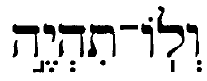
In order to mean what you want it to, it would have to be pointed differently:
"And if" welu —

That's not what Deuteronomy 22:29 says, either.Face to face wrote: ↑Wed Mar 11, 2026 11:23 pmThe passage is referring to a man who takes hold of a woman and the woman had ANSWERED or RESPONDED
Again, the word you're mistranslating as "if" is pointed wrong; it's welo instead of welu. Once again, it means "and to him." To make the next part of the phrase mean what you want it to, you have to ignore the prepositional prefix "to" on "woman." As it is actually written, it says, "to (be his) wife." One could argue that עִנָּ֔הּ there means "answered," but the verb is third-person masculine with a third-person feminine pronominal suffix: "he answered her." That doesn't help you, because it would just read that "she shall be his wife, because he answered her."
This has nothing to do with "Catholic translators." If these phrases mean what you want them to, then the Masoretic text itself is incorrect or corrupted. Is that your contention? Do you have a source that reads the Hebrew the way you're presenting it, or is it your own attempt at reading it?
My pronouns are he, him, and his.
-
Face to face
- Student
- Posts: 29
- Joined: Wed Apr 23, 2025 11:09 pm
- Been thanked: 5 times
Re: "Rape" in the Bible
Post #57it is very simple
simply - copy and paste the following Hebrew text into a translation
ונתן האישׁ השׁכב עמה לאבי הנער חמשׁים כסף ולו־תהיה לאשׁה תחת אשׁר ענה לא־יוכל שׁלחה כל־ימיו׃
simply - copy and paste the following Hebrew text into a translation
ונתן האישׁ השׁכב עמה לאבי הנער חמשׁים כסף ולו־תהיה לאשׁה תחת אשׁר ענה לא־יוכל שׁלחה כל־ימיו׃
Deu 25 + 1Sa 15
Remember what Amalek did unto thee by the way, when ye were come forth out of Egypt; he laid wait .......... in the way.............{ Amalek } he met thee by the way, and smote the hindmost of thee,
even all that were feeble behind thee, when thou wast faint and weary;
Remember what Amalek did unto thee by the way, when ye were come forth out of Egypt; he laid wait .......... in the way.............{ Amalek } he met thee by the way, and smote the hindmost of thee,
even all that were feeble behind thee, when thou wast faint and weary;
-
Face to face
- Student
- Posts: 29
- Joined: Wed Apr 23, 2025 11:09 pm
- Been thanked: 5 times
Re: "Rape" in the Bible
Post #58.
YOU ARE RIGHT, BUT IT WOULD HAVE TO DEPEND ON THE CONTEXT - IF THERE IS CORRUPTION PRESENT
HERE ARE TWO OPPOSING EXAMPLES OF HOW THIS WORD IS USED IN THE MANUSCRIPTS
Deu 1:36 Save Caleb the son of Jephunneh; he shall see it, and " to " him i will give ……..
:36 זולתי כלב בן־יפנה הוא יראנה ולו־אתן את־הארץ אשׁר דרך־בה ולבניו יען אשׁר מלא אחרי
:36 זולתי כלב בן־יפנה הוא יראנה ולו־אתן את־הארץ אשׁר דרך־בה ולבניו יען אשׁר מלא אחרי יהוה׃
Num 20:3 And the people chode with Moses, and spake, saying, " IF / Would " God that we had died when our brethren died before the LORD!
Num 20:3 וירב העם עם־משׁה ויאמרו לאמר ולו גוענו בגוע אחינו לפני יהוה׃
The difference between ולוـ (with a maqaf/hyphen, spelled ולו־) and ולו (without a maqaf, spelled ולו) is primarily grammatical and structural in Hebrew. ולו־ is used to attach the word "and/to him" directly to the next word,
while ולו is a standalone phrase, often meaning "and to him" or
"and - “ IF " - in classical Hebrew
“ ולו “ is a standalone phrase, = - “ IF / WOULD " - in classical Hebrew
------------------------------
Jos 7:7 would to God we had been content, and dwelt on the other side Jordan!
ולו
YOU ARE RIGHT, BUT IT WOULD HAVE TO DEPEND ON THE CONTEXT - IF THERE IS CORRUPTION PRESENT
HERE ARE TWO OPPOSING EXAMPLES OF HOW THIS WORD IS USED IN THE MANUSCRIPTS
Deu 1:36 Save Caleb the son of Jephunneh; he shall see it, and " to " him i will give ……..
:36 זולתי כלב בן־יפנה הוא יראנה ולו־אתן את־הארץ אשׁר דרך־בה ולבניו יען אשׁר מלא אחרי
:36 זולתי כלב בן־יפנה הוא יראנה ולו־אתן את־הארץ אשׁר דרך־בה ולבניו יען אשׁר מלא אחרי יהוה׃
Num 20:3 And the people chode with Moses, and spake, saying, " IF / Would " God that we had died when our brethren died before the LORD!
Num 20:3 וירב העם עם־משׁה ויאמרו לאמר ולו גוענו בגוע אחינו לפני יהוה׃
The difference between ולוـ (with a maqaf/hyphen, spelled ולו־) and ולו (without a maqaf, spelled ולו) is primarily grammatical and structural in Hebrew. ולו־ is used to attach the word "and/to him" directly to the next word,
while ולו is a standalone phrase, often meaning "and to him" or
"and - “ IF " - in classical Hebrew
“ ולו “ is a standalone phrase, = - “ IF / WOULD " - in classical Hebrew
------------------------------
Jos 7:7 would to God we had been content, and dwelt on the other side Jordan!
ולו
Last edited by Face to face on Sun Mar 15, 2026 6:20 pm, edited 1 time in total.
Deu 25 + 1Sa 15
Remember what Amalek did unto thee by the way, when ye were come forth out of Egypt; he laid wait .......... in the way.............{ Amalek } he met thee by the way, and smote the hindmost of thee,
even all that were feeble behind thee, when thou wast faint and weary;
Remember what Amalek did unto thee by the way, when ye were come forth out of Egypt; he laid wait .......... in the way.............{ Amalek } he met thee by the way, and smote the hindmost of thee,
even all that were feeble behind thee, when thou wast faint and weary;
-
Face to face
- Student
- Posts: 29
- Joined: Wed Apr 23, 2025 11:09 pm
- Been thanked: 5 times
Re: "Rape" in the Bible
Post #59.
The difference between ולוـ (with a maqaf/hyphen, spelled ולו־) and ולו (without a maqaf, spelled ולו) is primarily grammatical and structural in Hebrew. ולו־ is used to attach the word "and/to him" directly to the next word,
while ולו is a standalone phrase, often meaning "and to him" or "and - “ IF " - in classical Hebrew
“ ולו “ is a standalone phrase, = - “ IF " - in classical Hebrew
לוּ / לוּא - lû' - loo “ = A conditional particle; IF; by implication (interjectionally as a wish) would that!: - - if - peradventure, I pray thee, I would, would God (that).
HERE ARE TWO OPPOSING EXAMPLES OF HOW THIS WORD IS USED IN THE MANUSCRIPTS
Deu 1:36 Save Caleb the son of Jephunneh; he shall see it, and " to " him i will give ……..
:36 זולתי כלב בן־יפנה הוא יראנה ולו־אתן את־הארץ אשׁר דרך־בה ולבניו יען אשׁר מלא אחרי
AND
Num 20:3 And the people chode with Moses, and spake, saying, " IF / Would " God that we had died when our brethren died before the LORD!
Num 20:3 וירב העם עם־משׁה ויאמרו לאמר ולו גוענו בגוע אחינו לפני יהוה׃
The difference between ולוـ (with a maqaf/hyphen, spelled ולו־) and ולו (without a maqaf, spelled ולו) is primarily grammatical and structural in Hebrew. ולו־ is used to attach the word "and/to him" directly to the next word,
while ולו is a standalone phrase, often meaning "and to him" or
"and - “ IF " - in classical Hebrew
“ ולו “ is a standalone phrase, = - “ IF / WOULD " - in classical Hebrew
Jos 7:7 would to God we had been content, and dwelt on the other side Jordan!
ולו
Mic 2:11 If a man - - - / IF
Eze 14:15 If I cause - - - / IF
Isa 48:18 O that thou hadst - - - IF - - לוּ / לוּא - lû' - loo
: Psa 81:14 I should - - - / IF - לוּ / לוּא - lû' - loo
16:4 I also could - - - IF - לוּ / לוּא - lû' - loo
Job 9:33 that might lay - - - IF - לוּ / לוּא - lû' - loo
Job 6:2 Oh that - - - IF - לוּ / לוּא - lû' - loo
2Sa 19:7 if thou go - - - IF - לוּ / לוּא - lû' - loo
2Sa 18:12 Though I should - - - IF - לוּ / לוּא - lû' - loo
1Sa 14:30 if haply the people - - - IF - לוּ / לוּא - lû' - loo
Jdg 13:23 If the LORD - - - IF - לוּ / לוּא - lû' - loo
Jos 7:7 would to God - - - IF - לוּ / לוּא - lû' - loo
Deu 32:29 O that - - - IF - לוּ / לוּא - lû' - loo
Num 22:29 I would - - - IF - לוּ / לוּא - lû' - loo
Num 20:3 + Num 14:2 Would God that - - / if
Gen 50:15 Joseph will peradventure / maybe - - - IF - לוּ / לוּא - lû' - loo
Gen 30:34 it might be - - - IF - לוּ / לוּא - lû' - loo
Gen 23:13 if thou wilt give - - / if
Gen 17:18 O that Ishmael might- - - - IF - לוּ / לוּא - lû' - loo
The Hebrew word - לוּ / לוּא - lû' - loo = a conditional particle; meaning = “ IF “ by implication (interjectionally as a wish) would that!: - if (haply), peradventure, I pray thee, though, I would, would God (that).
28 that a man laying hold on a woman and lie with her and they be found having sex.
:29 THEN GIVE THE MAN WHO LAY DOWN WITH HER THE FATHER OF THE YOUNG WOMAN FIFTY - SILVER
IF HE HAD A WOMAN UNDER HIM WHO ANSWERED, - agreed - replied - consented - responded
NOT CAN HE PUT HER AWAY ALL HIS DAYS
- IF - לוּ / לוּא - lû' - loo
This could be translated to say -
to him having a woman
- or -
if he has a woman
its just depending on how the translation method is - its like saying - we if give you vs we to you give
meaning - - it would be that - would it be that - if it be that - to it being that - to that - if that
The difference between ולוـ (with a maqaf/hyphen, spelled ולו־) and ולו (without a maqaf, spelled ולו) is primarily grammatical and structural in Hebrew. ולו־ is used to attach the word "and/to him" directly to the next word,
while ולו is a standalone phrase, often meaning "and to him" or "and - “ IF " - in classical Hebrew
“ ולו “ is a standalone phrase, = - “ IF " - in classical Hebrew
לוּ / לוּא - lû' - loo “ = A conditional particle; IF; by implication (interjectionally as a wish) would that!: - - if - peradventure, I pray thee, I would, would God (that).
HERE ARE TWO OPPOSING EXAMPLES OF HOW THIS WORD IS USED IN THE MANUSCRIPTS
Deu 1:36 Save Caleb the son of Jephunneh; he shall see it, and " to " him i will give ……..
:36 זולתי כלב בן־יפנה הוא יראנה ולו־אתן את־הארץ אשׁר דרך־בה ולבניו יען אשׁר מלא אחרי
AND
Num 20:3 And the people chode with Moses, and spake, saying, " IF / Would " God that we had died when our brethren died before the LORD!
Num 20:3 וירב העם עם־משׁה ויאמרו לאמר ולו גוענו בגוע אחינו לפני יהוה׃
The difference between ולוـ (with a maqaf/hyphen, spelled ולו־) and ולו (without a maqaf, spelled ולו) is primarily grammatical and structural in Hebrew. ולו־ is used to attach the word "and/to him" directly to the next word,
while ולו is a standalone phrase, often meaning "and to him" or
"and - “ IF " - in classical Hebrew
“ ולו “ is a standalone phrase, = - “ IF / WOULD " - in classical Hebrew
Jos 7:7 would to God we had been content, and dwelt on the other side Jordan!
ולו
Mic 2:11 If a man - - - / IF
Eze 14:15 If I cause - - - / IF
Isa 48:18 O that thou hadst - - - IF - - לוּ / לוּא - lû' - loo
: Psa 81:14 I should - - - / IF - לוּ / לוּא - lû' - loo
16:4 I also could - - - IF - לוּ / לוּא - lû' - loo
Job 9:33 that might lay - - - IF - לוּ / לוּא - lû' - loo
Job 6:2 Oh that - - - IF - לוּ / לוּא - lû' - loo
2Sa 19:7 if thou go - - - IF - לוּ / לוּא - lû' - loo
2Sa 18:12 Though I should - - - IF - לוּ / לוּא - lû' - loo
1Sa 14:30 if haply the people - - - IF - לוּ / לוּא - lû' - loo
Jdg 13:23 If the LORD - - - IF - לוּ / לוּא - lû' - loo
Jos 7:7 would to God - - - IF - לוּ / לוּא - lû' - loo
Deu 32:29 O that - - - IF - לוּ / לוּא - lû' - loo
Num 22:29 I would - - - IF - לוּ / לוּא - lû' - loo
Num 20:3 + Num 14:2 Would God that - - / if
Gen 50:15 Joseph will peradventure / maybe - - - IF - לוּ / לוּא - lû' - loo
Gen 30:34 it might be - - - IF - לוּ / לוּא - lû' - loo
Gen 23:13 if thou wilt give - - / if
Gen 17:18 O that Ishmael might- - - - IF - לוּ / לוּא - lû' - loo
The Hebrew word - לוּ / לוּא - lû' - loo = a conditional particle; meaning = “ IF “ by implication (interjectionally as a wish) would that!: - if (haply), peradventure, I pray thee, though, I would, would God (that).
28 that a man laying hold on a woman and lie with her and they be found having sex.
:29 THEN GIVE THE MAN WHO LAY DOWN WITH HER THE FATHER OF THE YOUNG WOMAN FIFTY - SILVER
IF HE HAD A WOMAN UNDER HIM WHO ANSWERED, - agreed - replied - consented - responded
NOT CAN HE PUT HER AWAY ALL HIS DAYS
- IF - לוּ / לוּא - lû' - loo
This could be translated to say -
to him having a woman
- or -
if he has a woman
its just depending on how the translation method is - its like saying - we if give you vs we to you give
meaning - - it would be that - would it be that - if it be that - to it being that - to that - if that
Deu 25 + 1Sa 15
Remember what Amalek did unto thee by the way, when ye were come forth out of Egypt; he laid wait .......... in the way.............{ Amalek } he met thee by the way, and smote the hindmost of thee,
even all that were feeble behind thee, when thou wast faint and weary;
Remember what Amalek did unto thee by the way, when ye were come forth out of Egypt; he laid wait .......... in the way.............{ Amalek } he met thee by the way, and smote the hindmost of thee,
even all that were feeble behind thee, when thou wast faint and weary;
-
Face to face
- Student
- Posts: 29
- Joined: Wed Apr 23, 2025 11:09 pm
- Been thanked: 5 times
Re: "Rape" in the Bible
Post #60.
verse 36 would be using the word " to " - -as we see below = ולו־אתן
:36 זולתי כלב בן־יפנה הוא יראנה ולו־אתן את־הארץ אשׁר דרך־בה ולבניו יען אשׁר מלא אחרי יהוה׃
verse 36 would be using the word " to " - -as we see below = ולו־אתן
:36 זולתי כלב בן־יפנה הוא יראנה ולו־אתן את־הארץ אשׁר דרך־בה ולבניו יען אשׁר מלא אחרי יהוה׃
Deu 25 + 1Sa 15
Remember what Amalek did unto thee by the way, when ye were come forth out of Egypt; he laid wait .......... in the way.............{ Amalek } he met thee by the way, and smote the hindmost of thee,
even all that were feeble behind thee, when thou wast faint and weary;
Remember what Amalek did unto thee by the way, when ye were come forth out of Egypt; he laid wait .......... in the way.............{ Amalek } he met thee by the way, and smote the hindmost of thee,
even all that were feeble behind thee, when thou wast faint and weary;

