
Omniculpability = Omniscience + Omnipotence. If God exists and if God is omniscient and omnipotent, then, God must be held accountable for failing to prevent all suffering, unfairness and deaths. God is not exempt from ethical conduct. Culpability is directly proportional to power. The greater the power, the greater the culpability. Since living and non-living things are neither omniscient nor omnipotent, we are not omniculpable.
"Is God willing to prevent evil, but not able? Then he is not omnipotent.
Is he able, but not willing? Then he is malevolent.
Is he both able and willing? Then whence cometh evil?
Is he neither able nor willing? Then why call him God?"
Epicurus
"Ethics, too, are nothing but reverence for life. This is what gives me the fundamental principle of morality, namely, that good consists in maintaining, promoting, and enhancing life, and that destroying, injuring, and limiting life are evil." Albert Schweitzer, "Civilization and Ethics", 1949. Doing good is always good. Doing evil is always evil.
Omniculpability = Omniscience + Omnipotence
Moderator: Moderators
-
Compassionist
- Guru
- Posts: 1524
- Joined: Tue Feb 19, 2008 5:56 pm
- Has thanked: 1070 times
- Been thanked: 252 times
-
nobspeople
- Prodigy
- Posts: 3187
- Joined: Wed Nov 11, 2020 11:32 am
- Has thanked: 1510 times
- Been thanked: 826 times
Re: Omniculpability = Omniscience + Omnipotence
Post #2Good and evil is relative so many times.Compassionist wrote: ↑Sat Dec 26, 2020 6:54 pm Omniculpability = Omniscience + Omnipotence. If God exists and if God is omniscient and omnipotent, then, God must be held accountable for failing to prevent all suffering, unfairness and deaths. God is not exempt from ethical conduct. Culpability is directly proportional to power. The greater the power, the greater the culpability. Since living and non-living things are neither omniscient nor omnipotent, we are not omniculpable.
"Is God willing to prevent evil, but not able? Then he is not omnipotent.
Is he able, but not willing? Then he is malevolent.
Is he both able and willing? Then whence cometh evil?
Is he neither able nor willing? Then why call him God?"
Epicurus
"Ethics, too, are nothing but reverence for life. This is what gives me the fundamental principle of morality, namely, that good consists in maintaining, promoting, and enhancing life, and that destroying, injuring, and limiting life are evil." Albert Schweitzer, "Civilization and Ethics", 1949. Doing good is always good. Doing evil is always evil.
That said, there's a train of thought that those that believe God is good/Satan is evil are wrong.
So is there universal good and evil, or does it change over time?
Have a great, potentially godless, day!
-
Purple Knight

- Prodigy
- Posts: 3950
- Joined: Wed Feb 12, 2020 6:00 pm
- Has thanked: 1259 times
- Been thanked: 806 times
Re: Omniculpability = Omniscience + Omnipotence
Post #3The usual objection is free will.
He is able, and unwilling, because he is unwilling to stifle free will.
If he really did give people immortal souls, then he's found a sort of a workaround to even really allowing evil, because this reality is basically just a horrible, horrible dream. We wake up and put it all behind us.
So he's essentially culpable for nothing because it's all just a simulation. We think it's real, so we're actually culpable for what we do.
I've often thought about this scenario and I can't really come to a conclusion about how I see it morally. Is it okay to put people through horrible torture just because it's not real? One thing I ponder is that when we wake from a nightmare, we're perhaps so ready to forget it and move on only because the events that transpired within had no consequences. But the paradox is that over enough time, having enough horrible nightmares with enough regularity will have consequences for the psyche.
So let's say that when feels like a lot of suffering here, is actually over in a blink and it only happens once and it has no real consequences except those we brought on ourselves.
I'm not sure how I feel about that, because I am in the dream now and it's horrid. I want out. I want that this should never have been done to me... but who the heck knows; I might have even asked for it. So the me that's me now hates it, but the other me maybe doesn't and I have to answer as if I'm him: The dreamer who just woke up from a bad nightmare and probably asked to go in deep into the horror and prove himself. My life is a console game to him, and that sucks, and we're not really the same person, and I think I ought to say that I object to this treatment.
He is able, and unwilling, because he is unwilling to stifle free will.
If he really did give people immortal souls, then he's found a sort of a workaround to even really allowing evil, because this reality is basically just a horrible, horrible dream. We wake up and put it all behind us.
So he's essentially culpable for nothing because it's all just a simulation. We think it's real, so we're actually culpable for what we do.
I've often thought about this scenario and I can't really come to a conclusion about how I see it morally. Is it okay to put people through horrible torture just because it's not real? One thing I ponder is that when we wake from a nightmare, we're perhaps so ready to forget it and move on only because the events that transpired within had no consequences. But the paradox is that over enough time, having enough horrible nightmares with enough regularity will have consequences for the psyche.
So let's say that when feels like a lot of suffering here, is actually over in a blink and it only happens once and it has no real consequences except those we brought on ourselves.
I'm not sure how I feel about that, because I am in the dream now and it's horrid. I want out. I want that this should never have been done to me... but who the heck knows; I might have even asked for it. So the me that's me now hates it, but the other me maybe doesn't and I have to answer as if I'm him: The dreamer who just woke up from a bad nightmare and probably asked to go in deep into the horror and prove himself. My life is a console game to him, and that sucks, and we're not really the same person, and I think I ought to say that I object to this treatment.
-
Miles

- Savant
- Posts: 5179
- Joined: Fri Aug 28, 2009 4:19 pm
- Has thanked: 434 times
- Been thanked: 1618 times
Re: Omniculpability = Omniscience + Omnipotence
Post #4Depends on who's telling the story.nobspeople wrote: ↑Fri Feb 19, 2021 12:20 pmGood and evil is relative so many times.Compassionist wrote: ↑Sat Dec 26, 2020 6:54 pm Omniculpability = Omniscience + Omnipotence. If God exists and if God is omniscient and omnipotent, then, God must be held accountable for failing to prevent all suffering, unfairness and deaths. God is not exempt from ethical conduct. Culpability is directly proportional to power. The greater the power, the greater the culpability. Since living and non-living things are neither omniscient nor omnipotent, we are not omniculpable.
"Is God willing to prevent evil, but not able? Then he is not omnipotent.
Is he able, but not willing? Then he is malevolent.
Is he both able and willing? Then whence cometh evil?
Is he neither able nor willing? Then why call him God?"
Epicurus
"Ethics, too, are nothing but reverence for life. This is what gives me the fundamental principle of morality, namely, that good consists in maintaining, promoting, and enhancing life, and that destroying, injuring, and limiting life are evil." Albert Schweitzer, "Civilization and Ethics", 1949. Doing good is always good. Doing evil is always evil.
That said, there's a train of thought that those that believe God is good/Satan is evil are wrong.
So is there universal good and evil, or does it change over time?
.
-
Compassionist
- Guru
- Posts: 1524
- Joined: Tue Feb 19, 2008 5:56 pm
- Has thanked: 1070 times
- Been thanked: 252 times
Re: Omniculpability = Omniscience + Omnipotence
Post #5[Replying to nobspeople in post #2]
1. Moral judgments can vary across cultures and time.
2. Moral facts (if they exist) are therefore relative.
Only the first is clearly true.
Descriptive moral beliefs change; normative ethical principles do not automatically dissolve because of that. Slavery was once widely accepted; that does not make slavery morally acceptable. Moral disagreement shows fallibility, not relativity.
My argument does not rely on a simplistic “God = good, Satan = evil†narrative. In fact, I explicitly reject that framing. My claim is structural and ethical, not religious or mythological.
Culpability tracks power and knowledge.
This principle is not culturally contingent — it is already embedded in our legal systems, ethics, and everyday moral reasoning.
If an agent:
• foresees harm,
• has the power to prevent it, and
• allows it anyway,
then that agent bears responsibility.
This holds whether the agent is:
• a parent,
• a government,
• a corporation, or
• a deity.
If God is omniscient and omnipotent, then God is maximally culpable.
If God is not culpable, then God is either not omniscient, or not omnipotent, or not omnibenevolent.
That is the point of Epicurus’ trilemma — which remains unanswered, not outdated.
As for Schweitzer:
So the answer is this:
• Moral practices change.
• Moral understanding evolves.
• Moral responsibility scales with power.
But allowing preventable suffering when you have full knowledge and full power is wrong — in every era, under every moral vocabulary.
If a being claims ultimate power yet escapes ultimate responsibility, that is not moral depth.
It is special pleading.
This question actually splits into two very different claims, and they shouldn’t be conflated.Nobspeople wrote: Good and evil is relative so many times.
That said, there's a train of thought that those that believe God is good/Satan is evil are wrong.
So is there universal good and evil, or does it change over time?
1. Moral judgments can vary across cultures and time.
2. Moral facts (if they exist) are therefore relative.
Only the first is clearly true.
Descriptive moral beliefs change; normative ethical principles do not automatically dissolve because of that. Slavery was once widely accepted; that does not make slavery morally acceptable. Moral disagreement shows fallibility, not relativity.
My argument does not rely on a simplistic “God = good, Satan = evil†narrative. In fact, I explicitly reject that framing. My claim is structural and ethical, not religious or mythological.
Culpability tracks power and knowledge.
This principle is not culturally contingent — it is already embedded in our legal systems, ethics, and everyday moral reasoning.
If an agent:
• foresees harm,
• has the power to prevent it, and
• allows it anyway,
then that agent bears responsibility.
This holds whether the agent is:
• a parent,
• a government,
• a corporation, or
• a deity.
If God is omniscient and omnipotent, then God is maximally culpable.
If God is not culpable, then God is either not omniscient, or not omnipotent, or not omnibenevolent.
That is the point of Epicurus’ trilemma — which remains unanswered, not outdated.
As for Schweitzer:
This is not arbitrary. It is grounded in the shared condition of sentient vulnerability. Beings that can suffer have morally relevant interests. That fact does not change over time.“Good consists in maintaining, promoting, and enhancing life.â€
So the answer is this:
• Moral practices change.
• Moral understanding evolves.
• Moral responsibility scales with power.
But allowing preventable suffering when you have full knowledge and full power is wrong — in every era, under every moral vocabulary.
If a being claims ultimate power yet escapes ultimate responsibility, that is not moral depth.
It is special pleading.
-
Compassionist
- Guru
- Posts: 1524
- Joined: Tue Feb 19, 2008 5:56 pm
- Has thanked: 1070 times
- Been thanked: 252 times
Re: Omniculpability = Omniscience + Omnipotence
Post #6[Replying to Purple Knight in post #3]
The free-will defense only works if free will logically requires the permission of extreme, preventable suffering. That claim is rarely defended — it is usually assumed.
Granting libertarian free will does not require:
• bone cancer in children
• genocides
• natural disasters
• predation, disease, and non-moral suffering
• mass extinctions
• unequal starting conditions that drastically skew “choiceâ€
Free will could exist with far tighter constraints on harm. A world with speed limits still has driving. A world without torture still has choice.
So the appeal to free will does not absolve omnipotence; it merely shifts the burden of explanation.
Even though the universe is indeterministic at the quantum level, macroscopic human behaviour is causally constrained in a way that makes moral desert incoherent. The universe is effectively deterministic at the macroscopic level, regardless of whether it is fundamentally deterministic. Quantum indeterminacy collapses at the macroscopic level due to quantum decoherence. I am a hard determinist and a hard incompatibilist because it is the most evidence-based position. Sentient biological organisms make choices that are determined by genes, environments, nutrients and experiences.
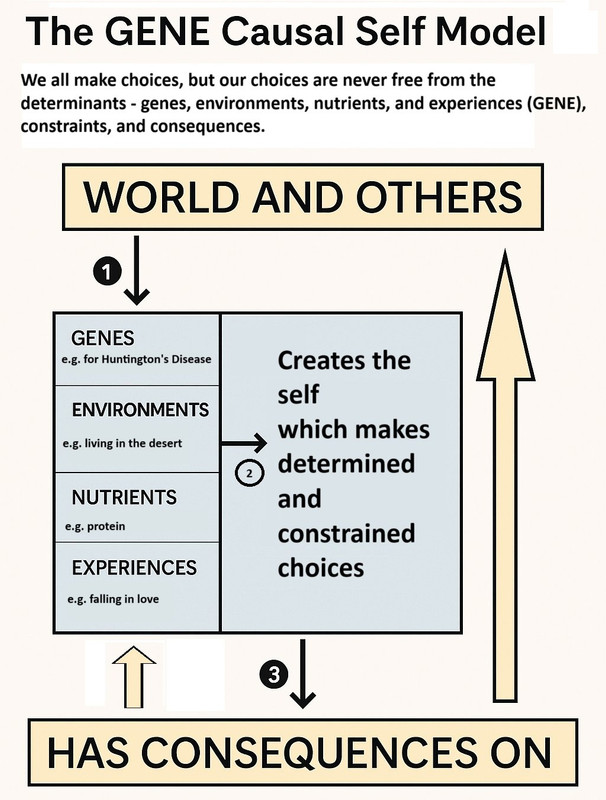
Calling suffering a “dream,†a “simulation,†or a “test†does not dissolve moral responsibility if the experience is subjectively real to the one undergoing it.
Ethics tracks experience, not metaphysical bookkeeping.
Pain felt is pain suffered. Terror experienced is terror endured. Trauma endured is trauma endured — regardless of whether God later says “just testing.†In any case, why would an omniscient and omnipotent God need to test anyone or anything? We test things because we don't know. God doesn't have that problem if it is really omniscient and omnipotent.
If God drugs someone, induces ten years of terror, then erases their memory, God is still culpable — because the suffering occurred for ten years.
If a programmer creates sentient NPCs who feel pain and fear, the programmer is responsible for the rules governing that pain — even if the world is simulated.
Simulation changes ontology, not ethics.
An omniscient designer who:
• creates the simulation,
• sets the parameters,
• foresees all outcomes, and
• has the power to alter them
cannot escape responsibility by saying “it wasn’t ultimately real.â€
Only the victims thought it was real — and that is the morally relevant fact.
You already noted the key point:
• brief for everyone,
• harmless for everyone, or
• consequence-free for everyone.
Many lives end inside the nightmare — broken, terrified, traumatised.
A promise of later compensation does not retroactively justify inflicted harm. Paying damages does not legalize assault.
Suffering here is:
• unevenly distributed,
• often lifelong,
• frequently inherited, and
• sometimes ends in death without recovery.
Moreover, even a single instance of extreme suffering requires justification — not mere assurance that “it’ll all be fine later.â€
If God tortures you once, “only once,†with perfect foresight and total control, God is still culpable.
Consent must be:
• informed,
• contemporaneous, and
• revocable.
A hypothetical pre-existence self cannot ethically bind a later suffering self — especially when the later self explicitly objects.
You say it plainly:
If a system continues despite the subject’s ongoing refusal, then whatever its origin, it has become coercive.
So here is the core issue, stripped bare:
If God is omniscient and omnipotent, then:
• free will does not require maximal suffering,
• simulations do not excuse inflicted pain,
• compensation does not erase culpability, and
• hypothetical consent does not override lived objection.
If God is not culpable, then God is either not omnipotent, or not omniscient, or not omnibenevolent.
That conclusion is not cynical.
It is the ethical cost of taking suffering seriously.
And you are right about one thing above all:
If this is a game, it is being played with pieces that feel pain — and that alone makes the designer culpable.
Yes — and it is also the weakest once examined carefully.PurpleKnight wrote: The usual objection is free will.
The free-will defense only works if free will logically requires the permission of extreme, preventable suffering. That claim is rarely defended — it is usually assumed.
Granting libertarian free will does not require:
• bone cancer in children
• genocides
• natural disasters
• predation, disease, and non-moral suffering
• mass extinctions
• unequal starting conditions that drastically skew “choiceâ€
Free will could exist with far tighter constraints on harm. A world with speed limits still has driving. A world without torture still has choice.
So the appeal to free will does not absolve omnipotence; it merely shifts the burden of explanation.
Even though the universe is indeterministic at the quantum level, macroscopic human behaviour is causally constrained in a way that makes moral desert incoherent. The universe is effectively deterministic at the macroscopic level, regardless of whether it is fundamentally deterministic. Quantum indeterminacy collapses at the macroscopic level due to quantum decoherence. I am a hard determinist and a hard incompatibilist because it is the most evidence-based position. Sentient biological organisms make choices that are determined by genes, environments, nutrients and experiences.
This move does not eliminate God's culpability — it re-labels it.If he really did give people immortal souls, then he's found a sort of a workaround … this reality is basically just a horrible, horrible dream.
Calling suffering a “dream,†a “simulation,†or a “test†does not dissolve moral responsibility if the experience is subjectively real to the one undergoing it.
Ethics tracks experience, not metaphysical bookkeeping.
Pain felt is pain suffered. Terror experienced is terror endured. Trauma endured is trauma endured — regardless of whether God later says “just testing.†In any case, why would an omniscient and omnipotent God need to test anyone or anything? We test things because we don't know. God doesn't have that problem if it is really omniscient and omnipotent.
If God drugs someone, induces ten years of terror, then erases their memory, God is still culpable — because the suffering occurred for ten years.
This is false, even by ordinary human standards.So he's essentially culpable for nothing because it's all just a simulation.
If a programmer creates sentient NPCs who feel pain and fear, the programmer is responsible for the rules governing that pain — even if the world is simulated.
Simulation changes ontology, not ethics.
An omniscient designer who:
• creates the simulation,
• sets the parameters,
• foresees all outcomes, and
• has the power to alter them
cannot escape responsibility by saying “it wasn’t ultimately real.â€
Only the victims thought it was real — and that is the morally relevant fact.
Your own instincts answer this correctly: no.Is it okay to put people through horrible torture just because it's not real?
You already noted the key point:
Exactly. And this world is not:Over enough time, having enough horrible nightmares with enough regularity will have consequences for the psyche.
• brief for everyone,
• harmless for everyone, or
• consequence-free for everyone.
Many lives end inside the nightmare — broken, terrified, traumatised.
A promise of later compensation does not retroactively justify inflicted harm. Paying damages does not legalize assault.
This hypothetical does not describe our world.So let's say … it only happens once and it has no real consequences.
Suffering here is:
• unevenly distributed,
• often lifelong,
• frequently inherited, and
• sometimes ends in death without recovery.
Moreover, even a single instance of extreme suffering requires justification — not mere assurance that “it’ll all be fine later.â€
If God tortures you once, “only once,†with perfect foresight and total control, God is still culpable.
This is speculative retroactive consent — and it fails ethically.I might have even asked for it.
Consent must be:
• informed,
• contemporaneous, and
• revocable.
A hypothetical pre-existence self cannot ethically bind a later suffering self — especially when the later self explicitly objects.
You say it plainly:
That objection matters. It matters now.I think I ought to say that I object to this treatment.
If a system continues despite the subject’s ongoing refusal, then whatever its origin, it has become coercive.
So here is the core issue, stripped bare:
If God is omniscient and omnipotent, then:
• free will does not require maximal suffering,
• simulations do not excuse inflicted pain,
• compensation does not erase culpability, and
• hypothetical consent does not override lived objection.
If God is not culpable, then God is either not omnipotent, or not omniscient, or not omnibenevolent.
That conclusion is not cynical.
It is the ethical cost of taking suffering seriously.
And you are right about one thing above all:
If this is a game, it is being played with pieces that feel pain — and that alone makes the designer culpable.
-
Compassionist
- Guru
- Posts: 1524
- Joined: Tue Feb 19, 2008 5:56 pm
- Has thanked: 1070 times
- Been thanked: 252 times
Re: Omniculpability = Omniscience + Omnipotence
Post #7Creatine Transporter Deficiency (CTD) Inside the GENE Causal Self Model
Let’s examine how Creatine Transporter Deficiency (CTD) fits into the GENE framework step by step.
CTD is caused by mutation in the SLC6A8 gene, which encodes the creatine transporter. It is typically X-linked and results in impaired transport of creatine into brain cells.
Creatine is essential for ATP buffering in neurons. When transport fails, brain energy metabolism is compromised.
Now let’s map this directly into my GENE model.
1. GENES
In the GENE model:
GENES → create the self
In CTD:
Mutation → defective creatine transporter → reduced neuronal energy availability → altered neural development → constrained cognitive architecture.
The “self†that develops is already shaped by this constraint before any conscious choice occurs.
This is not philosophical speculation. It is biochemical causation.
2. NUTRIENTS
Creatine is related to nutrients.
However, in CTD:
Adequate dietary creatine ≠adequate brain creatine.
The problem is not nutrient availability.
The problem is nutrient transport.
So this demonstrates something important in the GENE model:
Nutrients only matter insofar as genes allow them to be processed and used.
This is a G × N interaction.
3. ENVIRONMENTS
Environmental factors still matter:
• Early intervention
• Speech therapy
• Special education
• Structured caregiving
These can improve functional outcomes.
But they operate within biological limits set by the mutation.
So we have:
Genes constrain → Environment modifies within bounds.
4. EXPERIENCES
Because of cognitive and communication limitations, individuals with CTD may experience:
• Frustration
• Social exclusion
• Reinforcement of maladaptive patterns
• Dependency on caregivers
These experiences further shape the developing self.
So the causal chain becomes:
Gene mutation → neurodevelopmental constraint → altered experiences → further shaping of behaviour and identity.
5. CHOICE UNDER CONSTRAINT
Executive functions commonly affected in CTD include:
• Working memory
• Language processing
• Impulse inhibition
• Planning
• Emotional regulation
So the available action space is smaller.
Not metaphorically smaller.
Computationally smaller.
Choice is downstream of neurobiology.
6. CONSEQUENCES AND FEEDBACK
The individual’s actions affect:
• Family dynamics
• Educational systems
• Healthcare resources
• Social responses
Those responses then feed back into:
Environment and Experience variables in GENE.
The model is recursive.
What CTD Demonstrates About the GENE model
CTD clearly shows:
1. A single gene mutation can alter the trajectory of the self.
2. Cognitive capacity depends on metabolic constraints.
3. Executive control is biologically instantiated.
4. “Freedom†is bounded by neurobiology.
5. Moral responsibility must be graded.
When constraints are obvious (as in CTD), everyone recognises reduced responsibility.
The GENE model simply extends that same principle to all cases in degree.
In CTD, we can trace:
Gene mutation
→ Impaired creatine transport
→ Reduced ATP buffering
→ Altered neural development
→ Reduced executive function
→ Constrained choice space
→ Altered consequences
→ Environmental feedback
The system is causally continuous.
There is no metaphysical gap where an uncaused “free self†appears.
CTD, therefore, serves as a concrete neurological case study supporting the GENE Causal Self Model.
But if:
• God creates the person,
• God creates their temperament,
• God creates their environment,
• God foreknows every outcome,
then ultimate moral responsibility cannot rest on the creature.
Foreknown certainty + deliberate creation = responsibility at the highest causal level. If God is real, all suffering, injustice and death are 100% God's fault.
-
Purple Knight
- Prodigy
- Posts: 3950
- Joined: Wed Feb 12, 2020 6:00 pm
- Has thanked: 1259 times
- Been thanked: 806 times
Re: Omniculpability = Omniscience + Omnipotence
Post #8Do you believe we have the right to inflict pain on ourselves?Compassionist wrote: ↑Fri Jan 30, 2026 9:46 amIf this is a game, it is being played with pieces that feel pain and that alone makes the designer culpable.
Do you believe we have the ability to consent to pain being inflicted upon us?
No laws. No rules. Just me and Dan on an island.
Dan says, "Hey, Purple Knight, I am suffering a lot. It's my arm, man. It's infected. Come here and cut it off before it spreads any more."
I say, "Well, I've got this axe. It'll hurt some, but I believe you when you say you are suffering. I'll do it if you really truly want me to."
Do I do anything wrong, assuming for the sake of not mucking up the issue that Dan isn't lying and it's the only way I can help him? If I take more than one strike, he's going to scream and the pain's going to get really intense, and he might tell me to stop. But leaving him with his arm half off is the worst case. If I start, I have to finish. So consent has to be sticky, at least a little bit.

